
This is nuts. When's the crash?
Also: accosting a pop-economist, benchmarking private investments, gambling at Wetherspoons, and burying the dead

We’re all agreed on what happens next, pretty much. Even Goldman Sachs is talking openly about what happens next. Here’s the first paragraph of a client note this week from Goldman economists Dominic Wilson and Vickie Chang:
[A]s the value built into AI-related equities has grown, more optimistic assumptions about the ultimate economic gains for US companies from AI are needed to justify it. This likely makes the market more vulnerable to challenges to the more optimistic story. Although robust earnings may dominate valuation concerns for now, we think investors should focus on the potential challenges to the theme and their consequences for portfolios.
Wilson and Chang suggest preparing for these “challenges to the more optimistic story” by finding a “distinction between aggregate shocks and distributional shocks” and “protecting against aggregate and macro risks to the AI thesis”. Why bank analysts have to write like this, we don’t know.
The basic idea being buried under the verbiage is that there are things which might shrink the size of the AI pie: slower-than-expected adoption, tighter funding markets, an east-west price war, etc. Other happenings, such as an easing of chip shortages, might only rearrange who gets how much of the AI pie. Goldman can sell you lots of ways to hedge for a smaller pie, since it’s a straightforward macro trade. But if you want to hedge for possible changes in pie distribution, good luck. Stock picking is a different department, in which the average tenure of analyst is much shorter.
Over at Jefferies, head of equity strategy Chris Wood has for some time been offering clients a sum of all fears in one simple, easily ignorable package.
His latest outlines his expectation of “massive capital destruction”, as token parsimony replaces tokenmaxxing, and as Chinese open-source models divert spending away from the US majors. It also covers default risk on hyperscaler debt, a lot of which is sitting off-balance-sheet via data centre lease commitments, and the artificial earnings boom from non-cash unrealised gains in investments, compute sales being recognised upfront, and depreciation costs being kept unrealistically low. On top of all that, Wood cites a viral blog from earlier this month about how commitments from hyperscaler tenants like OpenAI should be viewed as liabilities because all they’ll ever do is refinance, not repay:
There is a potential “2008 real estate” analogy in AI infrastructure. Hyperscalers and neo-clouds have built data centers based on promises of future compute purchases, creating a credit-like structure tied to tenants whose long-term profitability is uncertain.
It might not be a complete surprise to know that Ed Zitron, the hyper-online unofficial voice of big-tech antipathy, was a recent guest speaker at Jefferies’ offices; the biggest difference between his body of work and the above summary is in the profanity count.
To be sure, it’s always in the Street’s interests to generate insurance sales by having a few people on payroll who talk up a bear case, while their sell-side analyst colleagues remain in employment by bending to the prevailing wind. The Street’s recent tone shift might be no more than a symptom of July’s tech correction, in which the chip-stock momentum reversed and the spending plans of Alphabet and Tesla remained nonchalantly gung-ho.
Whichever way, AI scepticism now feels like the consensus. As for what to do in preparation for a crash, you’re basically on your own. But if the music does stop playing, an awful lot of people are positioned and ready to say they told you so.
A week on Alphaville
○ By ear count, Gary Stevenson’s probably the most widely listened-to economist in the world right now. His claims to have once been a superstar FX trader lend authority to his lived experience of inequality and his calls for wealth taxes, but how true are they? It’s complicated, says Robert Smith, in a follow-up post that caused a lot of priors to surface in the comment box.
○ Metlen is also complicated. We take a dig through filings for its Greek solar business and ask whether related party agreements were as transparent as would be expected of a FTSE 100 constituent.
○ Trump’s selling flash-boy subscriptions to his tweets. Are they worth it? Ehhhh ….
○ Is AI capex visible yet in the productivity data? Ehhhh …..
○ Pension funds have a private investment benchmarking problem.
○ A look back at how the preeminent financial pamphlet reported on Jesse Livermore, the greatest day-trader to play the game.
○ Growth by postcode is a silly way to measure growth.
○ JD Wetherspoon doesn’t talk much about how much of its profit comes from pub slot machines. Into this void, we’ve attempted a few guestimates.
Best of Further Reading
○ A look at why the Irish economy never seems to click from Sinéad O’Sullivian, writing the But This Time It's Different newsletter.
○ Tract, a startup that tried to sell maps through Britain’s planning permissions process, talks us though why it didn't work.
○ Writing for The Guardian, computational neuroscience professor Anil Seth weighs in on whether an AI might ever be considered conscious.
○ Plough has a difficult read about what happens after life.
Charts charts chats
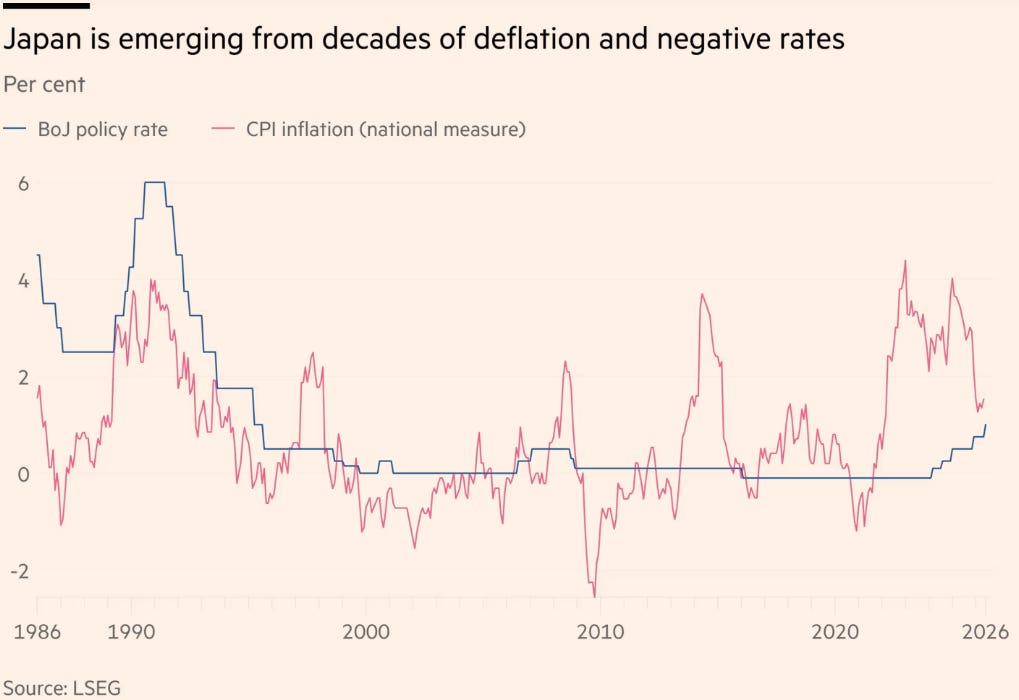
○ From a long read on Japan’s “shift from being a demand-shortage economy to a supply-shortage economy”.
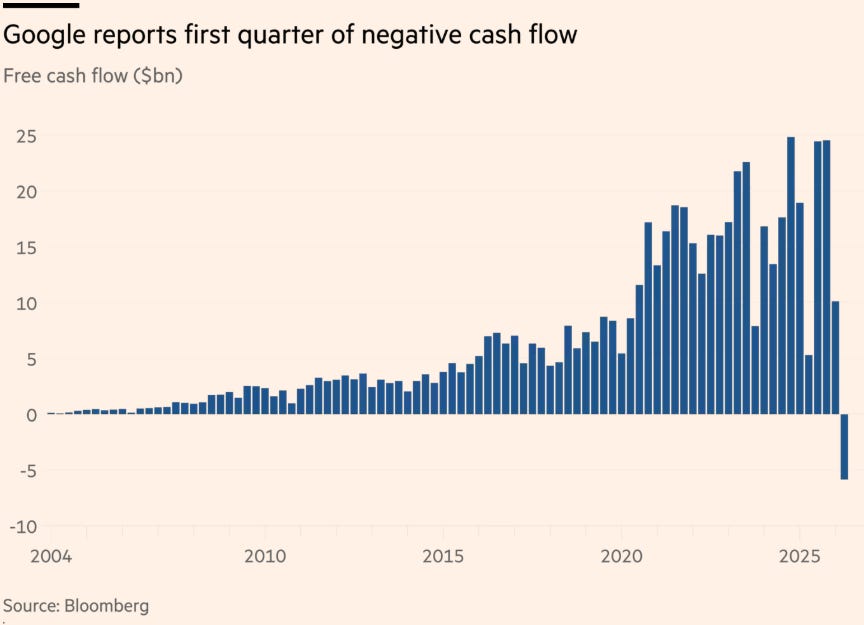
○ Google — Google! — is burning cash to keep up with the AI Joneses.
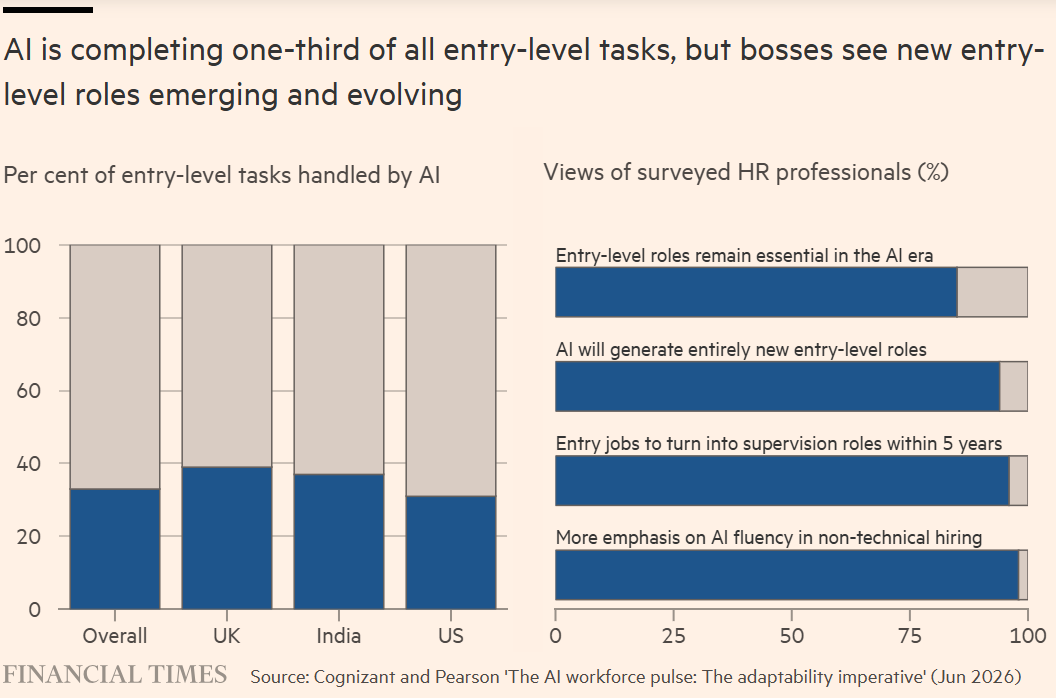
○ Andrew Hill considers what AI’s doing to the entry-level job market.
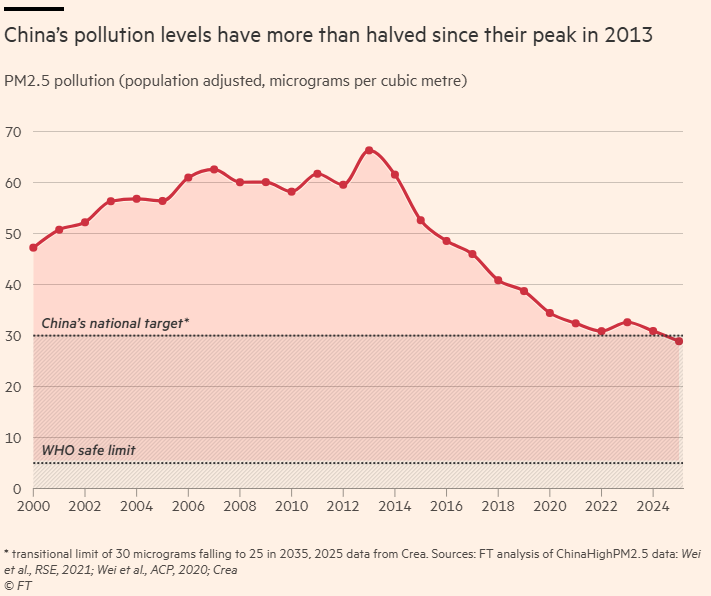
○ Since the “airpocalypse’”of winter 2013, China has been getting its act together on atmospheric polution levels. Here’s a big, detailed explainer of everything that went into making the above chart.
Oh man, someone asked *HR professionals* about what jobs are required? I can't imagine a less qualified cohort to answer.
Seems like there is something after animal spirits, maybe robot spirits: the market propels forward on its financialization energy. Obviously it can't last forever, but remember, some people could really run a long time on cocaine, too.