
AI people need people
Also: beer, Big Macs, truckers, crypto, lightbulbs, LinkedIn, and dogs on surfboards

Theme Park (1994) had a bug. One of the management simulation game’s central mechanics was that, if you underpaid park staff or put too few on litter collection, they’d walk off the job and form a picket line at the entrance. However, if the player picked up a protester and dropped them back inside the park’s perimeter fence, they would immediately forget their grievance and return to work.
This was back in the days when software came in a shrink-wrapped box, long before online patches. The striking-worker bug wasn’t in the power of the game’s co-creator, Demis Hassabis, to fix. All he could do was hope that players wouldn’t be evil.
A lot has happened for Hassabis since then. This week, for example, he was moved upstairs. An update from Mountain View, California, informed us that Hassabis is “stepping back from running Google DeepMind, the AI lab he founded, with day-to-day control passing to new senior vice-president, Koray Kavukcuoglu”:
The overhaul represents a seismic shift at the $4.4tn company, as commercial urgency eclipses the research-led culture that defined its DeepMind lab for more than a decade.
Not unusually, this being the FT, the reader comments on that story are as informative as the article.
A few correspondents interpret the reshuffle as a signal that Google is on the cusp of inventing artificial general intelligence, and that co-founder Sergey Brin is barging back in to claim the glory. Several others explain in authentic jargon all the ways Google’s AI business has been pissing off customers. “Antigravity has also deteriorated, frequently losing context of the repository under edit”, complains one Google Gemini user, which sounds quite alarming.
Another recurring theme in the comments is to highlight the loss of Jeff Dean, Google’s chief scientist since 1999, who’s going to be “automating the experimental loop” at his own thing.
All of this speaks of a tension at Google that has existed long before its 2004 IPO: it’s an advertising superweapon that funds a coenoby for Nobel laureates.
Even during boom times at the Googleplex, internecine wars flared up periodically about whether research projects and moonshot operations helped everyone else hit their quarterly performance targets. Now — with Google hell-bent on creative destruction and outspending any company ever to exist — the conflict between what’s next and what’s never has gone nuclear.
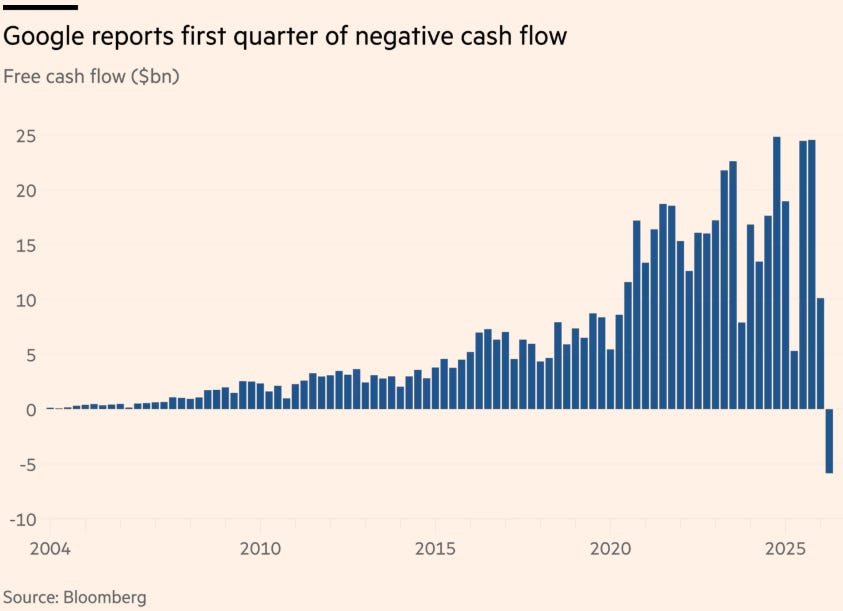
Which, from an HR perspective, is a bit weird.
If any company should be making good use of AI, it’s Google. Employees have root access to experimental frontier models with capabilities far beyond our tiny imaginations. The Silicon Valley dictum of eating your own dog food says AI should already be embedded into every process and management function. Whatever efficiencies and productivity benefits there are to be found, Google would be the one finding them.
Yet the Google investment case is a soap opera. We’re being asked to guess a plotline from Brin’s return to daily management, Dean’s exit, and a new office for Hassabis. The intelligences we care most about are still organic, not artificial.
The fortunes of the company that invented the large language model remain, perhaps more than any other in the trillion-dollar club, all about its people. And, unlike Theme Park (1994), its unhappy people won’t be pacified by being picked up and dropped back inside the Googleplex perimeter fence.
A week on Alphaville
○ The Economist’s Big Mac Index doesn’t do what it says it does, for all the reasons Dan Davies outlines.
○ SpaceX can’t escape the gravity of its staggered lockup agreements.
○ A cool new thing for CEOs is to say compounding when they don’t mean compounding.
○ An update in the continuing series of bank analysts annoying deals journalists by trying to grade them by accuracy and doing it badly.
○ Why does the UK Office of National Statistics publish a monthly GDP data series when it’s nearly always wrong?
○ Iran’s available Strait of Hormuz toll charge legal workarounds.
○ An informed guess at how much the US threw at its yen intervention …
○ .. and some informed guessing about how much Japan has made from FX trading.
○ US Treasury secretary Scott Bessent misremembers the yen intervention of 1998.
○ What employment history edits on LinkedIn tell us about AI.
○ A few reasons (beyond empire building) that can explain why AstraZeneca has looked at buying BMS.
○ Finally, after four years of quantitative tightening, the Bank of England agrees with the market on what it does.
○ Is Kevin Warsh the Lionel Messi of Monetary policy?
Best of Further Reading
○ Market Monetarist gets into why the market’s so down on Warsh.
○ From Morgan Stanley Asset Management, a report about how the wisdom of crowds expresses itself across markets for prediction, betting, and the exchange of stocks.
○ MauryCYZ addresses some misplaced beliefs about lightbulbs.
○ Can we interest you in a chip manufacturing infographic in the graphical style of Rollercoaster Tycoon?
○ A dispatch in SFGate from the dog surfing world championships may not be the week’s most important story, but it’s the one we’re choosing to include here.
Charts, Charts, Charts
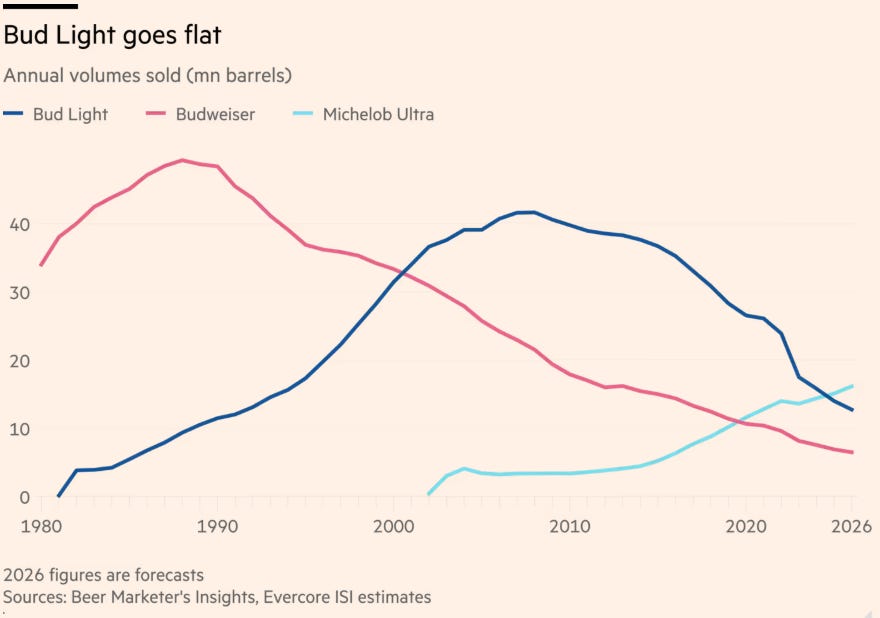
○ The story of how AB Inbev turned Bud Light from America’s everyman beer into an also-ran.
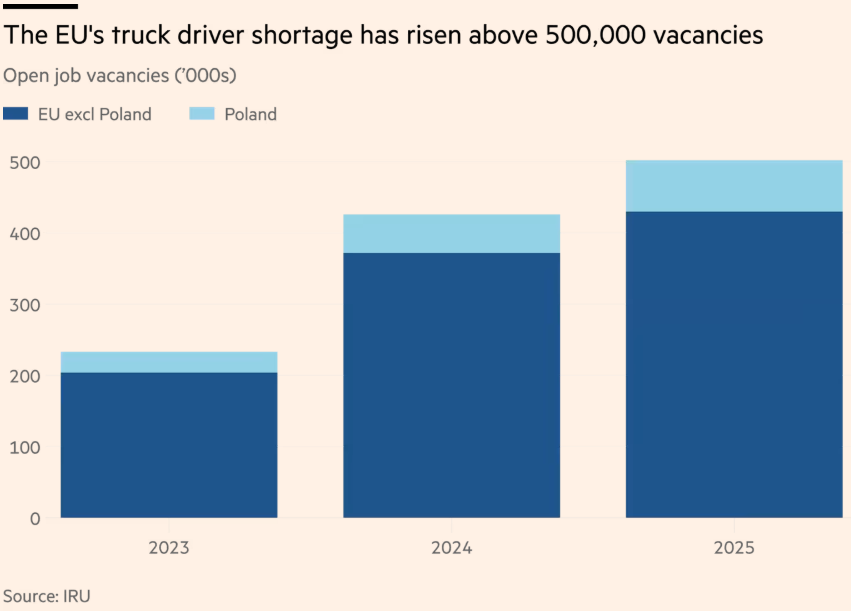
○ Europe is short half a million truckers as drivers — nearly all men, often Polish — retire or drop out of the low-margin, heavily regulated industry in search of a better life.
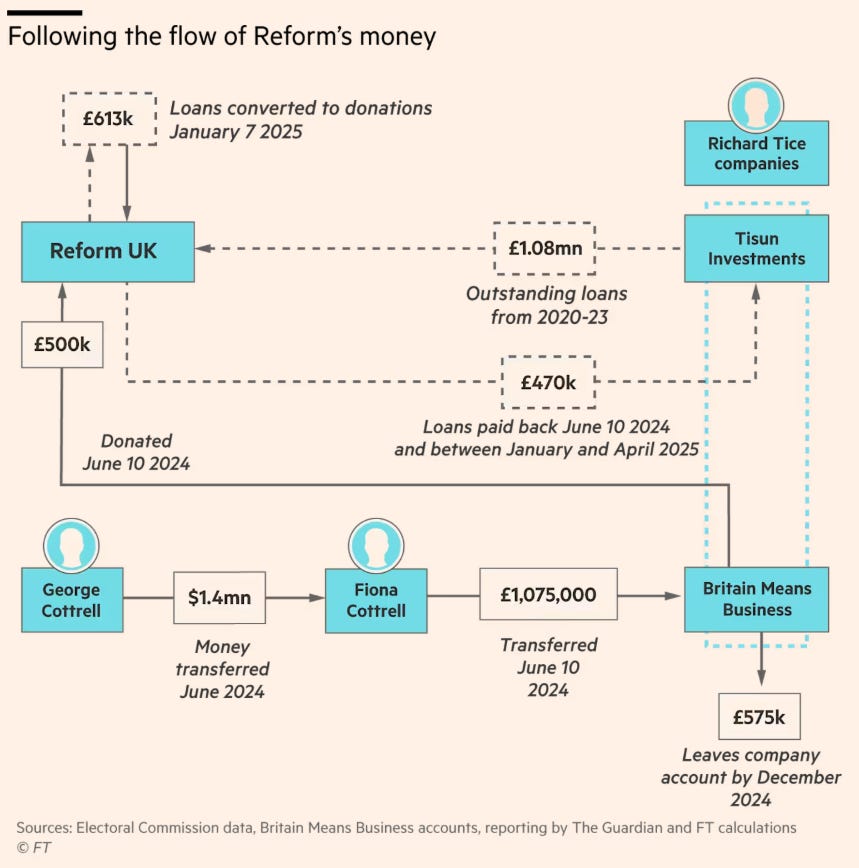
○ Donations from convicted fraudster George Cottrell to Nigel Farage’s Reform UK party have gone via a circuitous route. What purpose all this complexity serves is not obvious.
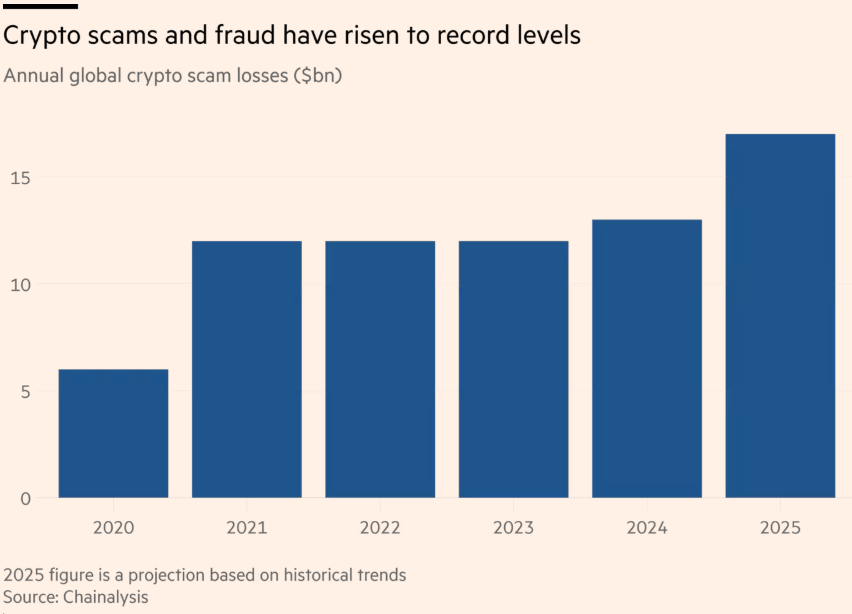
○ One in the eye for everyone who says crypto doesn’t have a use case.
The Theme Park bug is the perfect metaphor here — most “AI adoption” in HR right now isn’t fixing the underlying grievance, it’s just picking up the protester and dropping them back inside the fence. Looks resolved on the dashboard, nothing structural actually changed.
Absolutely hilarious! And shrewd.